
Watching your paycheck vanish days after it arrives is a shared experience for many starting their careers.
Your paycheck doesn’t just get spent; it gets divided and scattered. Before the money even settles in your account, a portion is already claimed for rent, another chunk is reserved for student loan payments, and what’s left has to cover everything from groceries to that concert ticket your friends are all buying.
Thinking about saving for a trip next year becomes a distant thought when your main focus is simply making sure you can cover next week’s groceries and gas without your card getting declined at the checkout line.
Your parents might have balanced a checkbook. Now, your financial life happens on a phone screen. The right apps do not just track your spending. They help you build a plan that fits your specific rhythm and challenges.
The good news is that a new wave of platforms is built specifically for your life. They connect directly to your accounts, learn your habits, and offer guidance that fits your reality. This is not your parents’ financial advice. It is a more interactive, immediate way to build the security and freedom you want.
Finelo: Building Your Financial Confidence from the Ground Up
Finelo doesn’t assume you know anything about finance, and it doesn’t assume you know nothing. When you first open the app, it asks you a simple set of questions to gauge your starting point. It wants to know if the word “ETF” makes you think of an investment fund or an entertainment channel.

Based on your responses, it assembles a custom sequence of lessons that feels like it was built just for you, transforming broad, intimidating subjects into a series of small, understandable steps that you can work through without ever feeling rushed or left behind.
You get a sandbox to play in. The platform’s market simulator gives you virtual cash to place trades and test theories. There is no risk to your savings, just a chance to see how markets move and how your decisions play out. Making a bad trade here teaches a lesson without an expensive price tag.
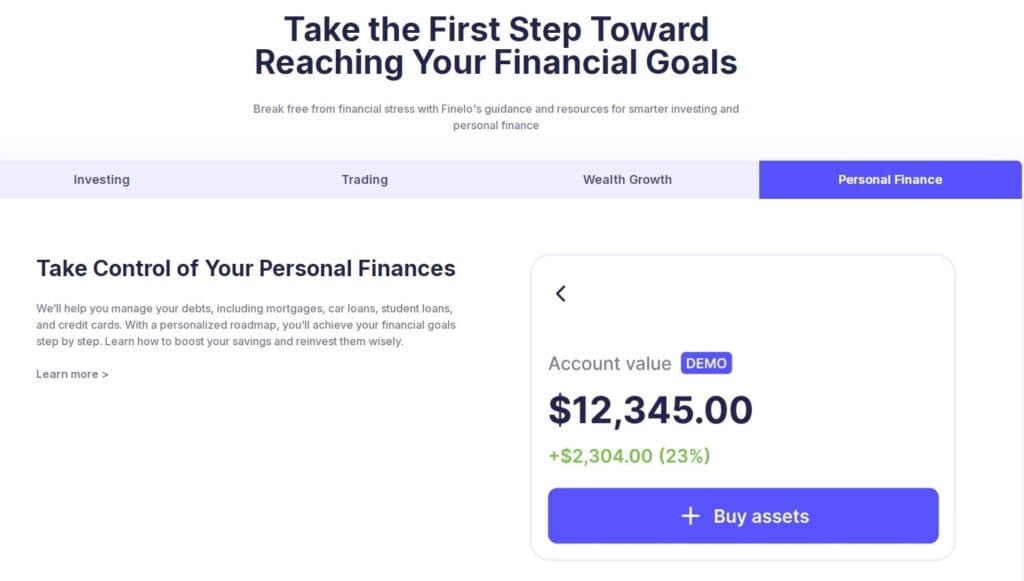
You don’t just watch videos on Finelo.com; you interact with them. The platform frequently pauses to ask you a question about what you just learned, ensuring the information actually lands before you move forward. If you’re on the bus, you can switch to audio mode and have the lessons read to you.
And the moment a term like “compound interest” makes your eyes glaze over, you can immediately ask the built-in assistant for a plain-English explanation, transforming a point of frustration into a moment of clarity without ever leaving the app.
Khan Academy: The Free, In-Depth Classroom
Khan Academy is the free, on-demand finance class you wish you had. Its digital library is packed with courses that explain money from the ground up. You can learn what a 401(k) really is, how taxes work on your investments, or the basics of building a budget, all without a textbook or tuition bill.
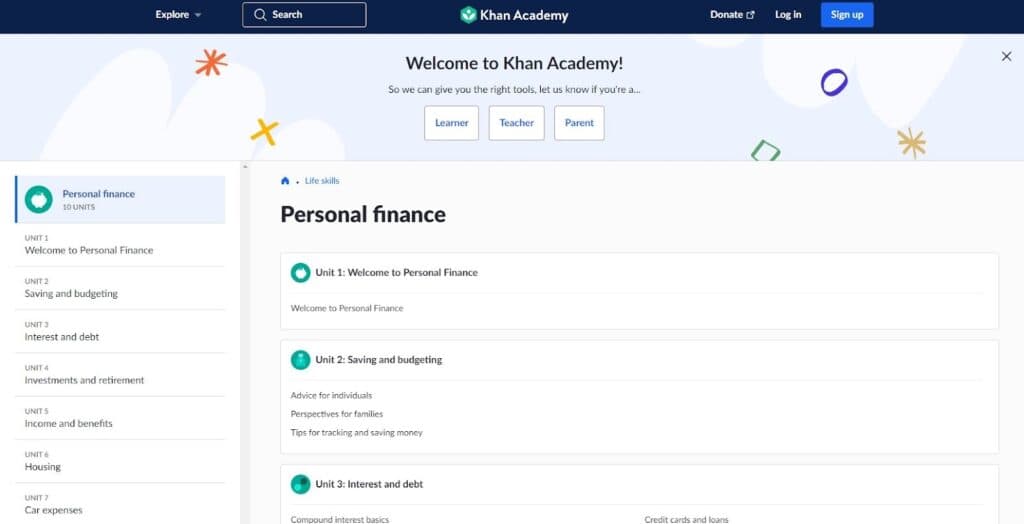
You control the pace entirely. Watch a video lesson during your lunch break. Pause it when you need to, rewind if something does not click. Follow-up exercises let you try out the concepts right away. This setup fits a busy schedule perfectly. You build knowledge piece by piece, creating a solid understanding of how money works on your own time.
Goodbudget: The Digital Envelope System
Goodbudget takes the classic cash-in-envelopes method and digitizes it for modern life. Picture this: inside the app, you create a series of color-coded digital envelopes, each one labeled for a specific purpose like “Electric Bill,” “Weekly Food Shop,” or “Friday Night Fun.”
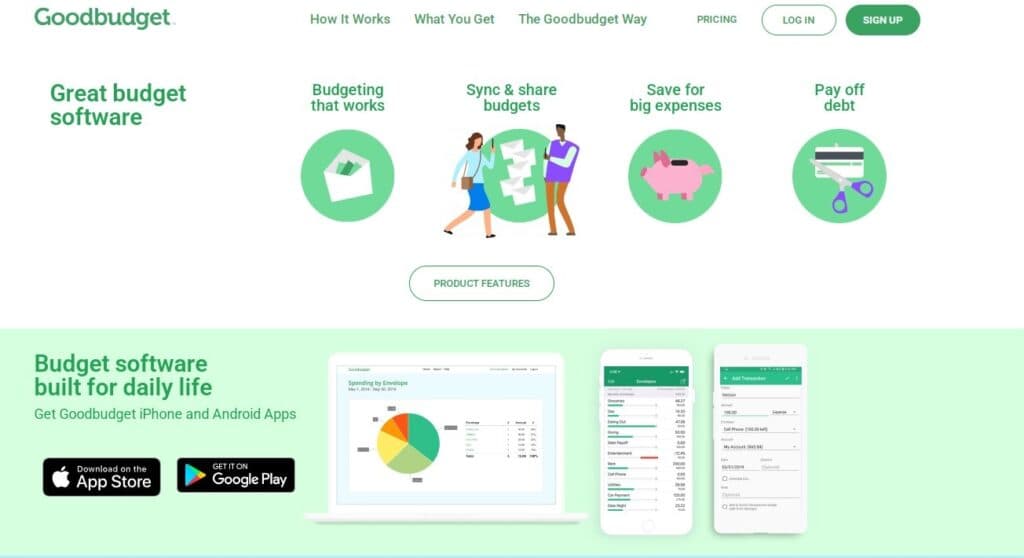
The moment your direct deposit hits your bank account, you virtually distribute those funds into their designated envelopes. From that point on, a quick look at your phone tells you the exact amount left in your “Restaurants” envelope, giving you an instant green or red light before you even consider ordering takeout.
This visual method changes your spending habits. Before you buy a coffee, you can check your “Dining Out” envelope to see if the funds are there. It stops you from guessing and makes you decide intentionally. The app also works well for couples or roommates. You can sync your budget, so everyone knows how much is left for shared bills or groceries, preventing those end-of-the-month financial mysteries.
Monarch Money: The Central Financial Command Center
Monarch Money becomes the mission control for your entire financial life. It connects to your bank, credit cards, and investment accounts, pulling everything into one dashboard. You stop logging into five different apps and just open this one. The view goes beyond daily cash flow to show your entire net worth, giving you the full picture of where you stand.
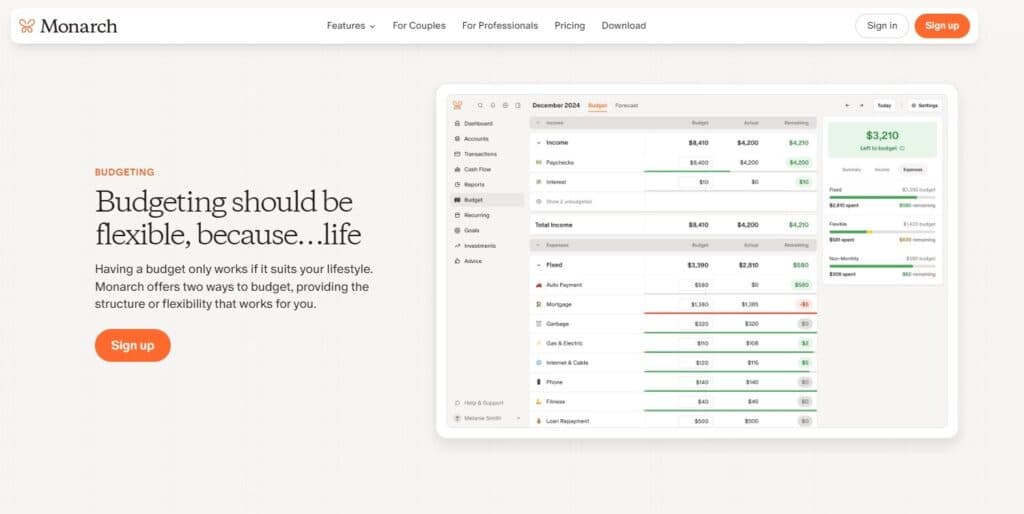
It is built for planning with someone else. Couples can use it to see all their accounts together, set savings targets for a house, and leave notes on transactions. You can create a custom goal for a big trip and watch your progress bar fill up over time.
Monarch helps you see how today’s spending choices impact the bigger life you are trying to build, making it a tool for designing your future, not just tracking your past.
Chipper: The Student Loan Sidekick
Chipper steps in to handle the weight of student loans. It links to your loan servicer and gathers all the details into one simple dashboard. No more hunting through different websites. You see your total debt, your interest rates, and your various payment plans in a single, clean view.
Once Chipper has a full picture of your debt, it gets to work building a personalized payoff strategy. The app analyzes the types of loans you have, their interest rates, and your current income to map out your options.
It might determine that switching to an income-driven plan would dramatically lower your monthly financial pressure and guide you through the application process step-by-step. For those who qualify, it can untangle the complex eligibility rules for forgiveness programs.
Beyond the big picture, it offers subtle tools like rounding up your daily coffee and Uber purchases, automatically applying those extra pennies and dimes toward your principal, creating a steady, passive trickle of extra payments.
Navigating the Student Loan Landscape
Student loan debt hangs over the start of many adult lives. Figuring out how to manage these payments is an essential skill, yet many guides to getting started with money skip right over it.
The table below breaks down the core components of a smart student loan strategy:
| Aspect | Key Consideration | Why It Matters for Young Adults |
| Loan Type | Federal vs. Private Loans | Federal loans come with safety nets and flexible payment options you will not find with private lenders. Your strategy should focus on these first |
| Repayment Strategy | Standard vs. Income-Driven Repayment (IDR) | Income-Driven Repayment (IDR) plans tie your bill to your earnings, which can help you breathe easier each month. The trade-off is that you will likely pay more interest over a longer period |
| Financial Integration | Balancing debt repayment with other goals | A holistic plan weighs loan repayment against other priorities like saving for retirement or a house, rather than treating it in isolation |
| Professional Tools | Using loan analysis software | Specialized tools can analyze complex federal loan options at a household level, helping to model long-term outcomes and find optimal strategies. |
Always use every federal loan option available to you before looking at private ones. Federal loans hold unique value. They offer payment plans based on your income and open doors to potential forgiveness programs that private companies simply do not provide.
The big question for many is whether to choose a standard repayment plan or an income-driven one. The cheapest monthly bill is not always the smartest financial move. Choosing a repayment path requires you to project your financial life years into the future.
You need to calculate the total sum you will ultimately pay back, consider the potential trajectory of your career and income, and honestly assess your eligibility for any government forgiveness programs.
For example, a software engineer with a high starting salary and substantial debt would likely benefit from an aggressive payoff plan to minimize total interest. In contrast, a social worker or public defender with the same debt load would almost certainly come out ahead by enrolling in an IDR plan and working toward full forgiveness after ten years of qualified payments.
Final Thoughts: Your Financial Path is Personal
Financial confidence grows from a system you build for yourself, not one you inherit. This means hand-picking a collection of digital tools that directly address the specific money problems that keep you up at night. Your personal finance stack might include a dedicated app for learning investment basics, a separate one for enforcing your weekly spending limits, and another solely focused on managing a specific debt.
As your life evolves, the financial challenges you face will shift, and the apps you rely on can shift with them. The initial step is almost always the most difficult. The most effective method is to isolate the single largest source of your current financial anxiety and then find the one platform that is designed specifically to solve it. Dive into the free courses on Khan Academy to build your foundational knowledge.
Use Finelo’s simulator to make your first virtual trades without any pressure. Implement Goodbudget’s digital envelopes to bring clarity to your cash flow. Let Chipper analyze your student loans and craft a clear path forward. The ability to start constructing a more secure financial life is available to you immediately, and you get to decide exactly how it begins.